The Fort of Bacalar: Where History Overlooks the Lagoon
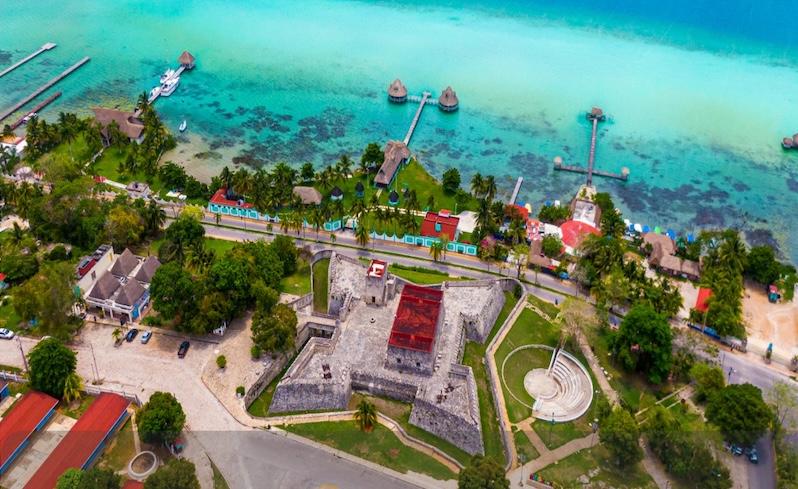
Before Bacalar became known for its boutique hotels, restaurants, and the famous seven shades of blue in its lagoon, this small border town held a strategic place in the history of the Yucatán Peninsula.
Even today, a stone structure in the center of Bacalar stands as a reminder of that past.
The San Felipe Fort in Bacalar stands opposite the main square, on elevated ground from which it was once possible to watch over the lagoon and its surroundings. Today it serves as a museum, but walking along its walls is also a journey through some of the most complex chapters in the history of this region.
A Fortress Overlooking the Water
Construction of the fort began in the eighteenth century, when the Spanish Crown sought to strengthen its presence in this area and protect Bacalar from incursions and British expansion from the Belize region. The fortification was built on high ground overlooking the lagoon, a location that made it possible to monitor the surrounding territory and anticipate potential attacks.
Its architecture still reflects the essence of that military purpose.
A quadrangular layout.
Four bastions.
A moat.
Masonry walls.
And a bridge leading inside.
What may now look like a picturesque building in a quiet town was, for centuries, a key part of the region’s defensive system.
The History Hidden Within Its Walls
One reason the fort is so interesting to visit is that its history does not belong to just one period.
Soldiers, officials, residents, and visitors have all passed through its grounds. After Mexican independence, the fortification continued to serve military purposes and remained connected to the region’s conflicts throughout the nineteenth century.
During the Caste War, which began in 1847, the fort was attacked and later remained in the hands of Maya rebels for decades, until federal forces recaptured it in 1901. It subsequently served a variety of purposes, including as military barracks and a hospital, and also went through periods of abandonment.
It is a story that reminds us Bacalar was not always the peaceful destination we know today.
For centuries, the town lay in a border region shaped by territorial disputes, political conflicts, and different forms of resistance.
From Fortress to Museum
Over time, the fort left its military role behind.
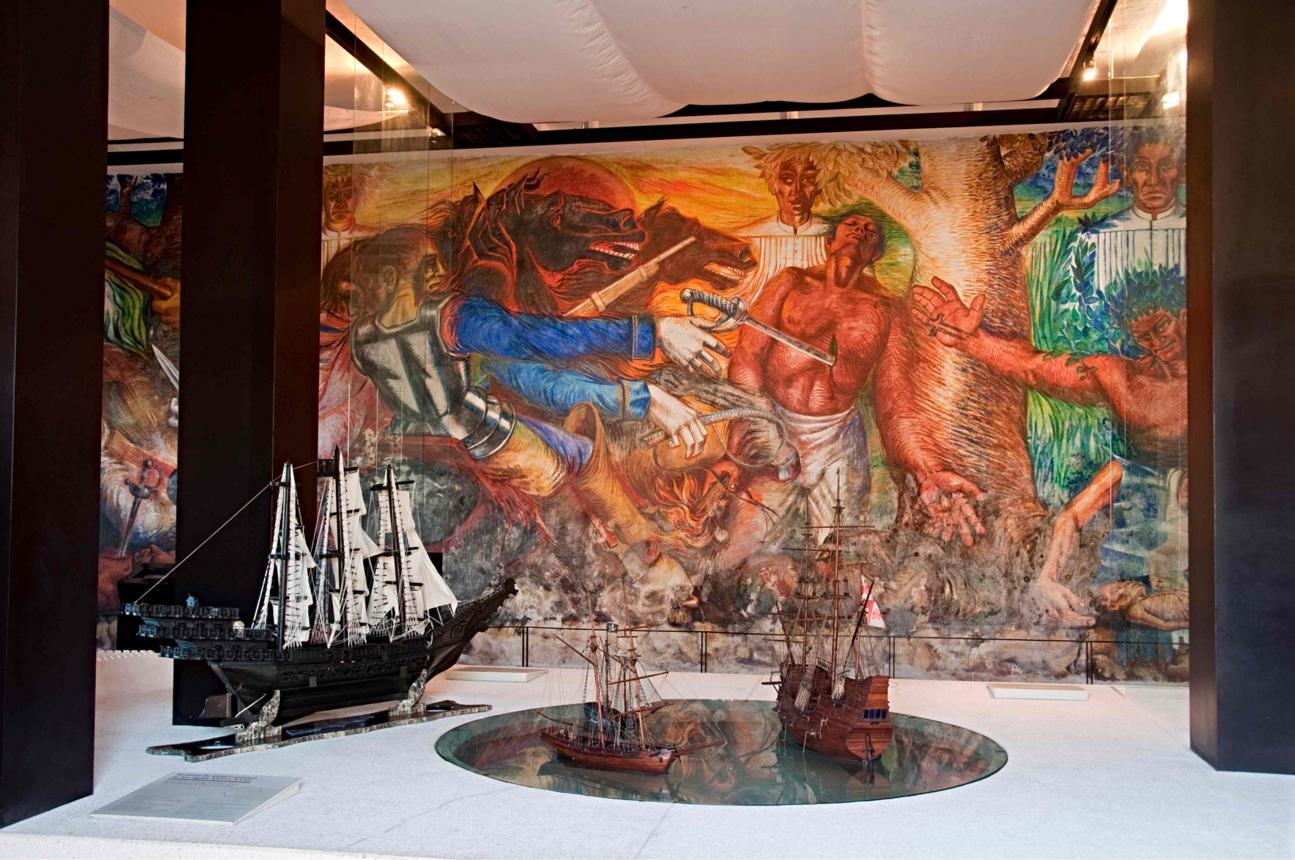
In 1983, it officially opened as a museum following restoration and adaptation work. Since then, the building has become one of Bacalar’s main cultural landmarks and remains a museum today.
The building itself is part of the exhibition.
You do not have to imagine what a colonial fortress looked like.
You are standing inside one.
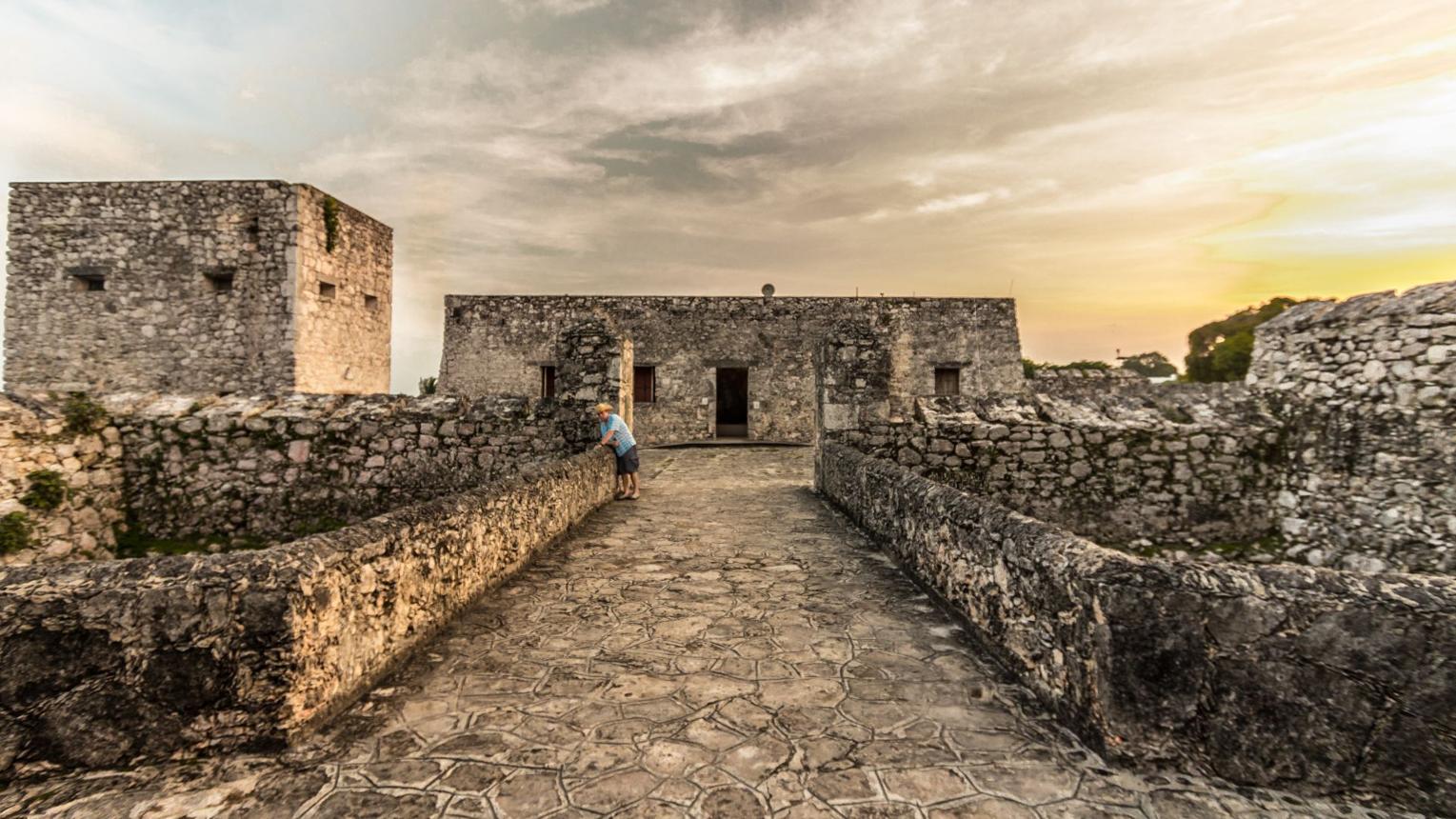
Its walls, bastions, and moat offer an understanding of defensive architecture that would be difficult to gain simply by looking at objects behind glass.
Mexico’s National Institute of Anthropology and History (INAH) lists it as an eighteenth-century military structure and an exhibition site currently used as a museum.
The Lagoon from Another Perspective
Perhaps one of the most memorable moments of a visit comes when you stop on the ramparts and look out toward the Lagoon of Seven Colors.
It is the same landscape that now fills magazines, social media posts, and travelers’ photographs.
But from the fort, you see it differently.
For visitors today, the lagoon represents relaxation, nature, and freedom.
For those who built the fortification, that same body of water was also an access route that had to be watched.
The landscape has not changed nearly as much as the way we see it.
And that perspective makes the fort one of the most interesting places to understand Bacalar.
More Than a Tourist Stop
It is easy to pass through Bacalar, walk around the town center, and photograph the fort without spending much time there.
But doing so means missing part of the history that explains how the town we know came to be.
San Felipe Fort is a reminder that Bacalar did not begin as a tourist destination.
It began as a strategic settlement in a region where different peoples, cultures, and powers met—and often clashed—over the centuries.
Its historical importance is acknowledged by INAH itself, which identifies it as one of the most significant historic monuments in southern Quintana Roo.
The Historic Heart of Bacalar
Today, life around the fort unfolds very differently.
There are restaurants.
Cafés.
Hotels.
Bicycles.
Travelers walking toward the lagoon.
And families enjoying the town square.
The fortress stands amid it all, like a bridge between two versions of Bacalar.
The Bacalar of yesterday, marked by borders, conflicts, and fortifications.
And the Bacalar of today, associated with nature, gastronomy, well-being, and a new generation of travelers.
Perhaps that is why the fort deserves a visit even from those who come to Bacalar mainly for its lagoon.
Because after spending a few days admiring the lagoon’s seven shades of blue, visiting the fort reveals another kind of depth in Bacalar.
Not the depth beneath the water.
But the depth beneath its history.
And from the top of its old walls, the lagoon seems to tell an entirely different story.
← View all guides